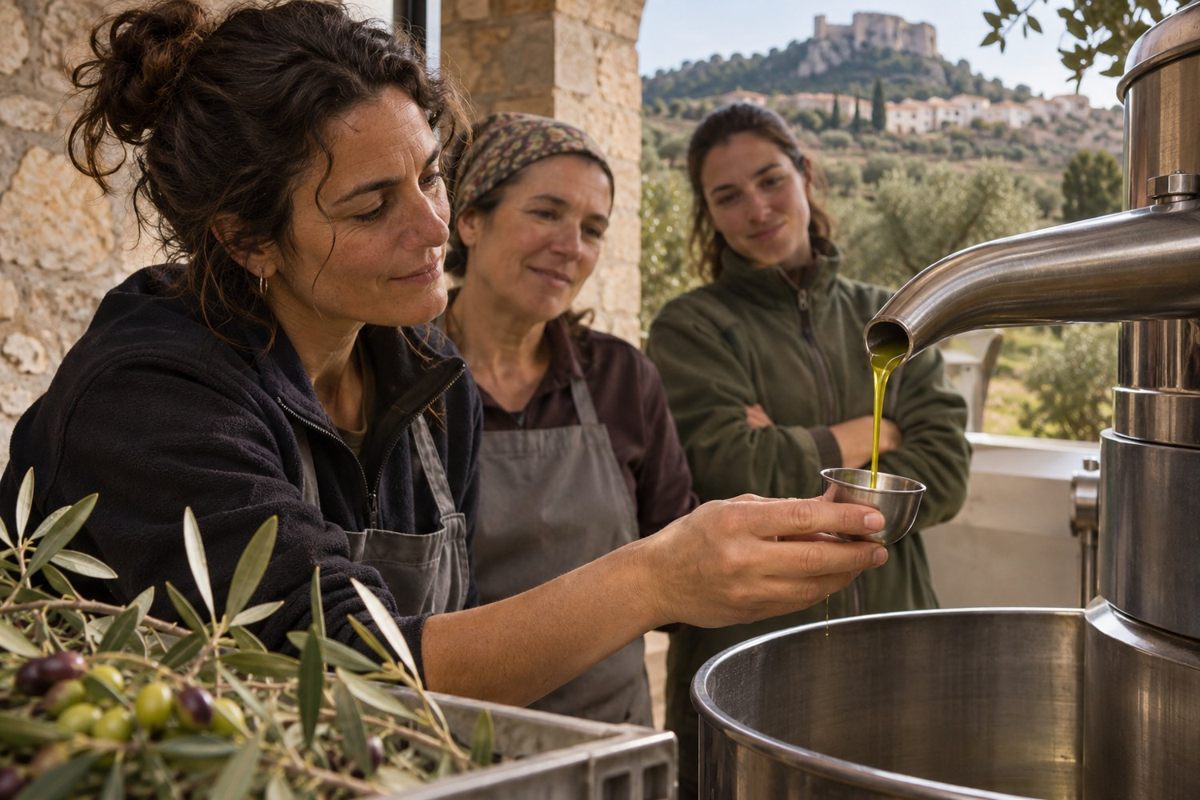
There is an immediate appeal to fresh olive oil. The colour catches the light, the aroma suggests a direction and a small taste can make months of agricultural work feel suddenly tangible. It is a compelling moment for anyone connected to a harvest. It is also a moment when excitement can move more quickly than the evidence needed to describe the product properly.
At Mas de Costa, I want to approach the first oil with curiosity and care. The moment should help us notice the product clearly, then follow those impressions with the information needed to describe it accurately. Excitement can begin the conversation without deciding its conclusion.
Notice before deciding what to call it
A first impression can be vivid without being a final classification. Aroma, flavour and texture can be described as observations, while the formal category of an oil depends on the applicable assessment. European rules distinguish olive oil categories using defined characteristics rather than the enthusiasm of the person tasting it. [1]
That distinction is useful for a small project. It allows an honest response to the product while keeping the label grounded. A memorable first taste is part of the experience. It should not be asked to replace the relevant quality information or to justify a claim simply because the oil has only recently left the mill.
Colour creates an impression very quickly
A striking green oil can look persuasive in a photograph. Yet colour alone is not a reliable quality grade. UC Davis includes this point in its guidance on olive oil myths and facts. [2] A paler oil should not be dismissed, and a vivid one should not be awarded a category by appearance.
This matters when creating images for the project. A photograph can be attractive without implying that a particular shade proves superiority. The product description should be supported by the actual lot. Visual style can invite someone to read more, but it cannot carry a technical conclusion that the image itself cannot establish.
Let the aroma have a vocabulary
Paying attention to oil becomes more interesting when the first question is specific. What can actually be noticed? Is the impression more like cut vegetation, fruit or another recognisable aroma? Descriptions should remain observations rather than a competition to find the most elaborate phrase.
A modest vocabulary used carefully can be more useful than a long list copied from a tasting note for another oil. The aim is to help a reader imagine the experience while leaving room for individual perception. For Mas de Costa, any published sensory description should come from the relevant product rather than from the style of oil we hoped to obtain.
Keep the sample connected to its identity
The excitement of a first taste should not separate the sample from the information that makes it useful. Which lot is being sampled? When and how was the sample taken? What handling followed? These questions become important when impressions are compared later or used in product communication.
A sample with a clear identity can support learning. An attractive glass whose origin is remembered only approximately cannot do the same job. The record does not need to intrude on the experience. It needs to remain clear enough that a later discussion refers to the same oil rather than an uncertain memory of it.
Freshness does not remove the need for storage
The oil's first day does not make it immune to the conditions that affect it afterwards. Packaging, storage and the time before use all become part of its continuing life. The next decisions deserve attention even when the sensory impression has been encouraging.
For a small release, this means arranging the route beyond the mill before treating the product as finished. A suitable place, clear lot information and a realistic bottling plan help carry the initial result forward. There is little value in celebrating careful harvesting while leaving the following stages to improvisation.
Use the first impression as a starting point for review
Once the relevant assessment and records are available, the oil can be considered alongside the season's decisions. What was the condition of the fruit? How did the harvest plan work? Which processing arrangements were used? The point is to learn from the relationship between these elements without claiming that one observation proves a simple cause.
A good result does not mean every decision was optimal. A disappointing result does not mean every part of the project failed. Careful review preserves the complexity needed to make a better decision next time, rather than turning the first taste into a judgement on the whole landscape.
Tasting notes are more useful when the conditions are reasonably comparable. A brief record of when and how the sample was tried can help distinguish a changing impression from a changing product. The goal is not to turn enjoyment into paperwork, but to give later reflection something dependable to return to.
The first oil deserves attention because it makes the work newly perceptible. At Mas de Costa, I want that moment to begin an honest conversation about the product. Enjoy the aroma, record the impression, obtain the appropriate information and keep caring for what has been made. The beginning is meaningful precisely because the responsibility continues.
Sources
[1] European Commission. Olive oil categories and marketing
[2] University of California Davis. Olive Oil Myths and Facts