An olive tree does not become productive more quickly because a business needs cash flow. A terrace does not repair itself between two invoices. Restoration has its own sequence, and much of the cost arrives before the land can contribute meaningfully to income. When I began thinking about how Mas de Costa could survive that interval, the central question was not simply where to find money. It was how to build activities whose different timelines could support one another.
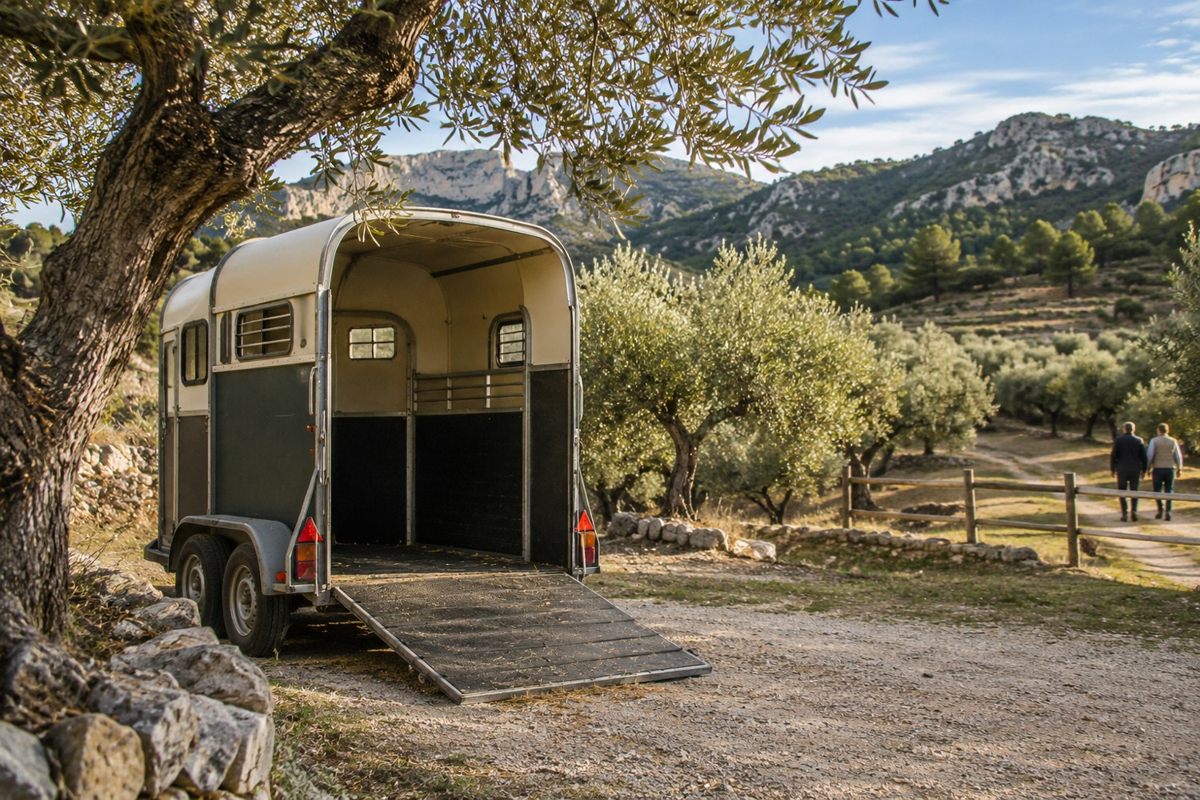
In my business plan, horse trading, transport and equestrian services form part of that practical structure. They are intended to support the slower work of rural restoration. The idea is straightforward. Its execution is not. One activity does not automatically finance another just because both sit inside the same business plan. The relationship has to work after the demands of each activity have been counted.
Separate income from money available for restoration
A payment received is not necessarily a surplus. The activity that earned it may have transport costs, care obligations, supplier payments and time requirements of its own. Moving the full receipt into a restoration budget can make the second activity appear financed while leaving the first one short of what it needs.
I therefore see internal separation as a useful discipline even within an integrated project. Each part should be understandable in its own right. What does it cost to provide the service? What commitments remain after payment? What can safely contribute to longer work? Without those questions, diversification risks becoming a story about support that the actual cash position does not confirm.
Match spending to the stage of the land
Restoration involves different types of expenditure. Some work prevents deterioration or enables safe access. Other work may increase future productivity. Still other ideas belong to a later stage, when the first areas can be maintained reliably. Treating every attractive improvement as equally urgent makes it harder to allocate limited resources.
A staged plan creates a sequence of decisions. It might ask whether an area can be reached, whether its trees have been assessed and whether the expected maintenance is manageable. These questions do not produce a universal formula. They provide reasons for acting now, waiting or changing the design. The budget then follows a practical sequence rather than the appeal of a finished vision.
Use existing capacity where it genuinely helps
I plan the oil business around a local mill while the restoration of our own groves develops. That arrangement recognises that a supply activity and land recovery can operate on different timelines. It can also avoid making new infrastructure the first financial burden of a business that is still establishing demand.
Such an arrangement needs accurate communication. A customer should be able to distinguish the origin of the oil from the landscape restoration that a business hopes to support. The relationship can be meaningful without suggesting that a bottle already contains oil from a particular recovering tree. Clear information creates a stronger basis for long term support than an overly complete story told too early.
Diversification introduces another kind of concentration
Several activities may reduce dependence on one source of revenue. They can also concentrate every decision in the same person. If each activity relies on the owner being available, the business may remain vulnerable despite having more than one income stream. Time and attention become the shared resource linking all the parts.
For that reason, I want to assess diversification through workload as well as financial contribution. Which tasks can be scheduled? Which require immediate response? Where could a delay affect animal care, customer commitments or the land? A business model that looks balanced in annual totals may still be difficult to operate during a week when several demands coincide.
Finance should not depend on an environmental promise
Regenerative work is sometimes described through future benefits that have not yet been measured. Those ambitions may be reasonable, but they should not be treated as guaranteed returns. The term regenerative agriculture itself covers different definitions and combinations of practices and outcomes. [1] A financial plan should remain understandable without assuming that every intended ecological improvement has already occurred.
This also affects how support is requested. Preorders, sponsorship and ordinary product sales are different arrangements. Customers need to understand which one is being offered and what is included. A clear description of the current stage is more useful than implying that a purchase guarantees a particular ecological result or financial outcome.
Building enough stability to keep going
The aim is not to make restoration look fast. It is to give slower work a credible way to continue. That may involve modest progress, revised priorities and a decision to postpone an expansion until an existing area can be cared for properly. Financial discipline is part of the environmental ambition because unfinished commitments can leave a landscape with another period of neglect.
Mas de Costa is being built around that relationship between immediate activity and long term land. I want each connection to become demonstrable: a service delivered responsibly, a margin understood, a restoration task completed and a maintenance obligation that can still be met afterwards. The vision becomes more durable when the everyday structure can carry it.
Sources
[1] Newton and colleagues Frontiers in Sustainable Food Systems. What Is Regenerative Agriculture A Review of Scholar and Practitioner Definitions Based on Processes and Outcomes 2020